


What’s a Mac? … “Nothing, What’s a macro to you” Wow, that sounded better in my head. Bad dad jokes aside, the topic of today is the always trendy, ever popular, and most controversial Macronutrient. If you don’t know what a macronutrient is or just want a better understanding, please read on.
There are basically two types of nutrients we consume. Macronutrients and micronutrients. These are named because of their relative size and not their importance. The three macros are fats, carbohydrates (carbs), and proteins. Click here for a nutrition label refresher. Micronutrients are the vitamins and minerals we need. The question of the day is: ” What is a macronutrient and what is the optimal percentage of each macro needed in order to lose weight?”
In this well-done review by Koliaki et al, they discussed the various types, styles and trends in diets over the last several decades and concluded the optimal ratio was still elusive. When we say “diets”, we are really just talking about macro ratios. For example, the infamous Atkins Diet, which exploded in the early 2000’s, is a high fat, extremely low carb diet. There is a heart healthy Low Fat Diet, the Mediterranean Diet, Paleo, and Keto Diet’s. These diet types have been promoted, refuted, modified, and accepted in various nutritional circles for decades with no clear answers. Compounding factors including cost, adherence, metabolic adaptation, baseline health, and sustainability all contributed to the moving target. Essentially a blended, individualized approach was best, but all had their advantages and disadvantages.

In my practice I like to promote healthy food choices with a lower carb, higher protein ratio comprised of:
- lower carbs (40-45%)
- moderate healthy fats (25-35%)
- high protein (30-35%)
Dr. Wolinski!! , What in the world does that mean? Well, simply put, it means if you eat 1800 calories per day approximately 35% should be carbs, 30% should be fat, and 35% should be protein.
“Well, what’s the math?”
The math, you say? I’m glad you asked. It roughly breaks down into
0.40*1800= 720 carb calories.
0.30*1800=540 fat calories
0.30*1800=540 protein calories.
“Yeah, but how many grams is that per day?”
Wow, it’s like you’re reading my mind!

Remember, carbs and protein share 4 calories per gram but fat is represented by a higher energy value of 9 calories. If we were using a money analogy and protein and carbs were worth a dollar, fat would be worth $2.25. To convert calories to grams it depends on which macro you want to convert. For carbs and protein, divide your calories by 4, and for fats, divide by 9. In this example we have:
180 grams of carbs
135 grams of protein
60 grams of fat
In past posts, I have covered why eating meals higher in protein is advantageous but I will briefly review it here. Fats and protein are much more satiable than carbs. Satiety is the feeling of being full. When we eat fats and proteins, we feel full quicker and longer than when we eat carbs. Especially if we are talking about simple carbs like sucrose, fructose, lactose; or refined sugar. Remember there are poor, better, and best choices when it comes to food.
Here’s more detail on the different Macros:
Give me an F!

Due to the history of our many diet choices, fats have taken a beating in the nutritional arena for some time. They were certainly given a grade of F in previous decades which may have skewed our diet preference more towards seemingly healthier carb choices. There are two main types of fats: saturated and unsaturated. We can divide these into less biochemically strict but more applicable definitions of Healthy versus Unhealthy fats. Yes, fats can be and are good for you.
Saturated fats are generally Solid at room temperature and examples included butter, animal fats, cream, and lard. These are considered unhealthy and should be eaten sparingly making up no more than 10% of your total daily calories. I would call them good choices but certainly not the best.
Unsaturated fats are generally liquid at room temperature and are comprised of a double bond. They are mono- or polyunsaturated. These fats are in avocado, peanuts, and fish. These fats have the essential Omega-3 and Omega-6 fatty acids which are required by the body, preferably in a 1:2 ratio, respectively. These would be the best choice.
Trans fatty acids are the worst fats and the main reason all fats get a bad reputation. These fats are in a lot of processed junk food, fried foods, margarine, and cookies.
Carbs Don’t Mean Keto
You can definitely be on a watchful, mindful carb plan and lose weight without ketosis. The ketogenic diet is super strict and not sustainable for most. Ketodiet plans are fads, not sustainable, and according to this Harvard study, eating 20-50g of carbohydrates per day just isn’t healthy long term. If you would like to kickstart your weight loss plan by initiating ketosis and staying at it for 1-2 months, I think that’s reasonable and very effective for some. However, at some point, you will need to switch to a more sustainable, long-term Lifestyle Change. I am saying you can watch what types of carbs you eat, eat a good amount (140-190g), and still lose weight. (numbers will vary based on target calories)
Guilty Pleasures

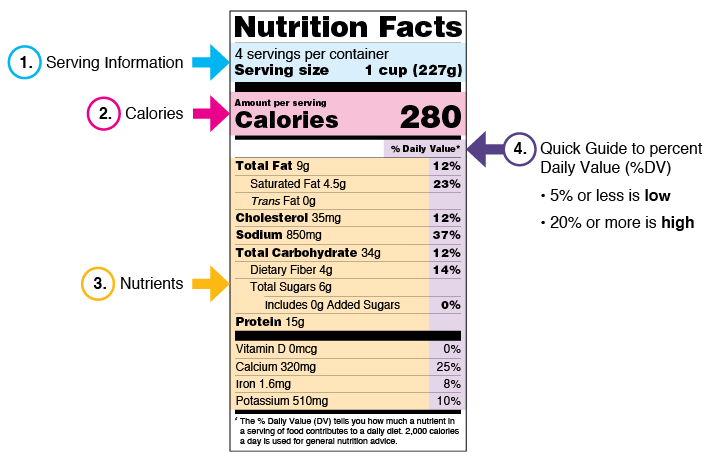
Let’s start with the bad. Simple refined sugar is the worst kind of carb you can eat. This is analogous to it’s cousin the trans-fatty acid. Actually combined they are thought to be responsible for the majority of the world’s obesity problem. The U.S. population consumes over 300% of the daily recommended intake of added sugar. Quite simply, if you want to lose weight, stop overeating added sugar. You can find added sugar content on every nutrition label under Total Carbohydrate. The image below shows “includes 0g of added sugar”. Try to eat things with 0-2g of added sugar and do not consume more the 10 grams per day. I’m not talking about total carbs or net carbs. I’m talking about Added Sugars. (see figure below) When you are more in a maintenance stage and no longer trying to lose weight, the recommended daily intake for added sugar is less than %5 of your total caloric intake or 100 grams based on a 2,000-calorie diet.
Indigestible!

It’s not inconceivable that we can not digest certain foods. It’s actually very healthy and promotes proper stool bulk, waste elimination, and “waist” elimination. When we eat leafy plants, fruits, or vegetables, the fiber is the part we can not digest. Eating fiber is one the healthiest things you can do for your body and for your GI tract.
Fiber can be soluble or insoluble and has many benefits including:
- lowering bad cholesterol-the fiber sequesters or hangs onto the bad cholesterol in the gut resulting in lowered LDL.
- lowering blood sugar-in a similar mechanism, fiber lowers and controls blood sugar by preventing its absorption.
- increased satiety- water follows and increases bulk which increasing the feeling of being full.
- regulate bowel movements- This indigestible bulk forms better stools and results in more frequent and predictable bowel patterns
- Improves bowel health by preventing hemorrhoids and diverticula (if you know you know) For those that don’t, diverticula are tiny outpouchings in the colon that can become impacted with fecal/food particles and get infected. This is quite painful and is ” the appendicitis” of the lower LEFT quadrant of the abdomen.
Sugar! …Wait… Sugar?
Sugar may not be what you think it is. Sugar is not just the sweet white or brown stuff in the kitchen that may be added to your coffee or tea or cookie recipe. These are refined sugars. Sugar can also occur naturally in food like apples, peaches, tomatoes, and carrots. Sure there may be sucrose in both of these but the sucrose in common table sugar has been isolated and processed by a refining technique that strips away the fiber, vitamins, and minerals that accompany natural sugars found in our fruits and vegetables. This results in rapid digestion, absorption, higher insulin spike, higher blood sugar, and less satiety which leaves you hungry for more. It is also void of any nutritional value. This is why sugar found in fruits and vegetables is preferred.

Natural sugars like glucose, fructose, sucrose, galactose, maltose, and lactose are found in fruits, vegetables, honey, and milk. Despite all the other sugar names you may see on ingredients, these 6 are the only naturally occurring sugars on earth. The rest are artificial, synthetic, man-made or sugar alcohols enter: sucralose, steviol, stevia, xylitol, sorbitol etc. (I am not saying sugar substitutes are bad but they are not natural sugars)
Some What’s Left?
If you have noticed Total Carbs on a nutrition label and actually added the numbers up, you may have noticed the number of carbs in fiber, total sugars, and added sugars don’t always add up to the actual number of total carbohydrates. This is because the remaining carbohydrates are complex carbs called starches. Starches seem complex but it is actually more simple than simple sugars. Starch is a simple long chain of glucose (amylose) or a branched complex chain of glucose ( amylopectin). These are found in potatoes, beans, split peas, rice, cereal, sweet potatoes, corn, and many more foods. In the example above, the total carbs in grams are 34, the fiber is 4 and the sugar is 6. That leaves 24 grams of starch.
Like most things, starch in itself is not unhealthy or bad but if over-consumed or predominantly unhealthy starches are consumed, it can lead to health problems. Examples of healthy starches are yams, squash, peas, whole grains, beans, and lentils. Unhealthy starches would include potatoes (mashed, fried, or baked), white bread, most breakfast cereals, and white rice. That’s not to say you can’t ever have this food again but when trying to lose weight or just eat healthier either eliminate them altogether or eat them very sparingly.
All digestible sugars get absorbed as either fructose or glucose. The main difference is the rate of absorption and subsequently the effect on insulin levels. This is the basis of the glycemic index. (whole different conversation).
Positively Pro-Protein
When trying to lose weight, study after study supports high protein in favor of carbs or fat. Multiple studies show daily target protein should be well above the recommended daily allowance. In fact, some experts suggest 0.8-1.5g per POUND of protein per day depending on your activity level. This assumes healthy kidneys and any serious medical problems where kidney function may be affected. Always consult with a doctor or trained health professional if you have any concerns regarding your health.
Tearing Down to Build Back Up

Protein is essential to weight loss but let’s talk about what protein is first. Protein is like any of these other macronutrients. Similar to fat and carbohydrates, protein is comprised of smaller molecules. These molecules are called amino acids. There are 20 amino acids used by our bodies and 9 of them are essential which means we need to obtain them from our diet. Amino acids link together to form peptides and even more amino acids are assembled together to form proteins. Think of proteins and protein complexes as small completed lego sets. In this episode of Dr. Wolinski’s metaphors, you actually eat a very ginormous lego sets called food. Your teeth, mouth enzymes, stomach and other digestive processes contribute to break it down further into smaller pieces. The point of this metaphor is your body takes more energy to break all those lego pieces down. It requires energy to break them down, sort them out, transport them into a much smaller area, and send them where they need to go to be utilized to build things the body needs. The energy required for this process is called the thermogenic effect of food. It is one of the main benefits of eating protein.
There are actually multiple studies demonstrating the benefits of protein for weight loss. In fact, there are so many I could not link all of them.
- Increased lean muscle mass when combined with exercise
- increased satiety resulting in less over all calories consumed (weight loss)
- releases anorexigenic peptides (more on this later but it includes the now very famous GLP-1)
- may improve insulin sensitivity (controversial independent effect especially in Diabetics)
- decreased cravings- this study concluded that increasing total protein to 25% of caloric intake decreased cravings by 60%
- thermogenic effect of food (as mentioned above)
Step Wise Tips
Try this
- Use the other articles in this blog to find a good healthy meal balance for you
- start eliminating unhealthy fat and carb choices and substitute protein-rich choices
- try to greatly reduce your added sugar intake per day to < 10 grams
- Avoid sugar/carb-laden beverages like sodas or beer
I sincerely hope you have enjoyed this article. Please like, subscribe and share if you have.
Dr. C.J. Wolinski


Products in this post and on this site are recommended based on my personal use, not my professional opinion, and individual results may vary. As an Amazon Affiliate, I could earn a commission on qualifying purchases.


 Nutrition and Weight Loss
Leave a comment